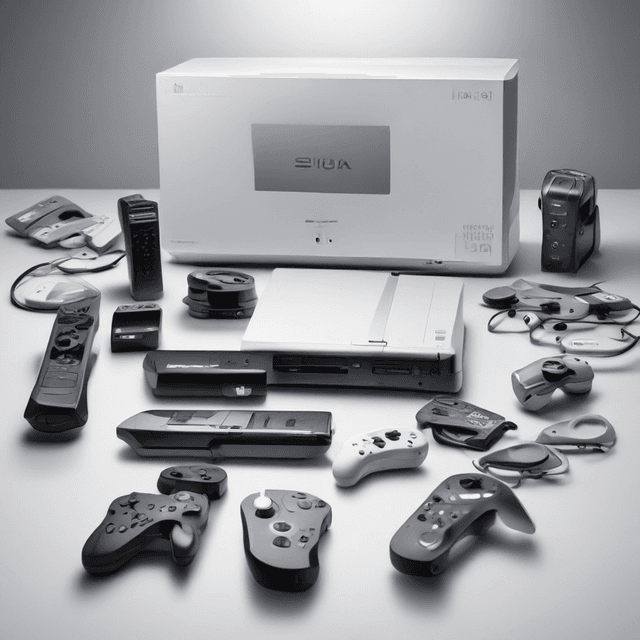
| Name | Segatendo Wii |
| Fanbase | Devoted following among casual and core gamers |
| Features | Motion controls like the Wii • Advanced online capabilities of the Sega Dreamcast • Blend of casual and core gaming |
| Developers | |
| Game library | Robust collection of first and third-party titles spanning Sega and Nintendo franchises |
| Release year | Early 2000s |
| Commercial performance | Not as dominant as the standalone Wii |
The Segatendo Wii was a video game console co-developed by Sega and Nintendo in the early 2000s, blending elements of both the Nintendo Wii and the Sega Dreamcast. Released in 2006, the Segatendo Wii offered a unique hardware design and gaming experience that appealed to both casual and core audiences.
The Segatendo Wii featured a distinctive white oval-shaped body, standing in contrast to the more conventional box-like designs of other consoles. Incorporating a combination of Wii-style motion controls and a traditional console controller, the Segatendo Wii gave players flexibility in how they interacted with games.
The console's internals were a collaboration between Sega and Nintendo engineers, leveraging the powerful graphics and networking capabilities of the Dreamcast with the intuitive controls and emphasis on accessible gameplay of the Wii. This allowed the Segatendo Wii to deliver games with high-end 3D visuals and immersive online features, while still catering to a broad audience of casual and family-friendly players.
One of the Segatendo Wii's key differentiators was its robust online infrastructure, which was significantly more advanced than the original Wii's limited internet capabilities. Borrowing from Sega's pioneering work on the Dreamcast, the Segatendo Wii offered seamless multiplayer, downloadable content, web browsing, and other internet-enabled features out of the box.
This connectivity allowed the Segatendo Wii to tap into Sega's deep well of classic game franchises, with many beloved titles from the Genesis, Saturn, and Dreamcast eras made available for digital purchase and online play. Nintendo's own first-party lineup was also well represented, creating a diverse library that appealed to a wide range of tastes.
While the Segatendo Wii never quite matched the phenomenal sales numbers of Nintendo's standalone Wii console, it still managed to carve out a dedicated niche among both casual and core gamers. Its motion controls and accessible games like Sonic Adventure Wii, Mario Party Wii, and Virtua Fighter Wii brought in family audiences, while more hardcore titles like Phantasy Star Online Wii, Skies of Arcadia Wii, and Shenmue Wii resonated with veteran players.
The console's online functionality and graphical prowess also made it a hub for experimental, boundary-pushing games that took advantage of its unique capabilities. Innovative indie titles, ambitious multiplayer experiences, and even rudimentary attempts at streaming and user-generated content emerged on the Segatendo Wii, foreshadowing trends that would become more prominent in later gaming platforms.
Though the Segatendo Wii was ultimately discontinued in 2010, it left a lasting impression on the industry. Its marriage of Sega and Nintendo's design sensibilities and game libraries resulted in a console that, while not a runaway commercial success, remains fondly remembered by many as an innovative and influential entry in video game history. The console's unique blend of motion controls, online features, and diverse software catalog continue to inspire new generations of game designers and hardware engineers.
